

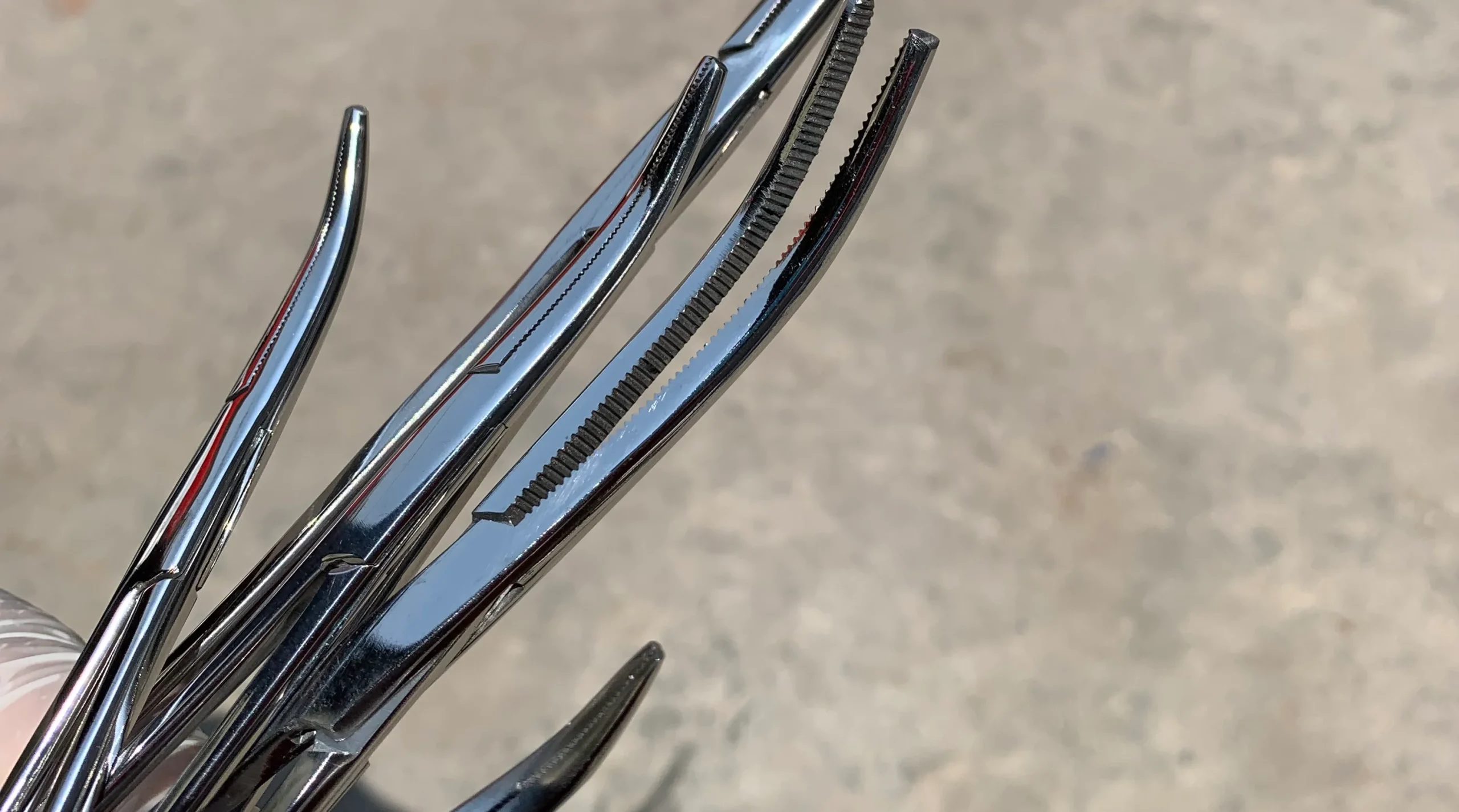
Most people only know Sialkot for footballs or boxing gloves. The real foundation of this city’s manufacturing obsession started over 115 years ago — with scalpels, forceps, and scissors used on First World War battlefields.
Here’s the actual timeline almost nobody talks about:
1908 – The Birth
A British army surgeon stationed in Punjab discovered that local blacksmiths in Sialkot could copy his German-made surgical scissors perfectly — and make them sharper and cheaper. The first export order went to London hospitals the same year. By 1914, Sialkot was already supplying instruments to British military hospitals during World War I.
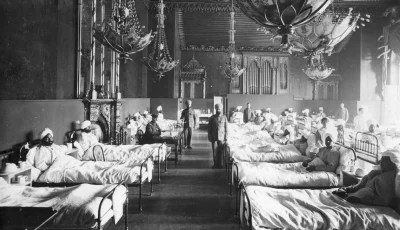
Injured Indian soldiers of the British Army at the Brighton Pavilion, converted into a military hospital in 1915. (Image credit: Hulton Archive/Getty Images)
1920s–1930s – The “Sheffield of the East”
British companies started placing huge orders. One famous story: In 1929, a Sialkot workshop received a broken pair of rare artery forceps from London, copied them exactly, and sent 500 perfect units back within weeks. The city earned the nickname “Sheffield of the East” because the steel quality and craftsmanship rivaled (or beat) British and German makers.
1947 – Partition Almost Killed the Industry
When India and Pakistan split, 90% of the skilled Hindu/Sikh craftsmen who specialized in surgical steel migrated to India. Sialkot was left with almost nothing. But the remaining Muslim craftsmen rebuilt the entire industry in under five years — teaching apprentices day and night. That insane resilience still runs in every factory here today.
1950s–1980s – Global Dominance
By the 1970s, Sialkot was making 80–90% of the world’s hand-forged reusable surgical instruments.
- Every major brand you see in hospitals (Aesculap, Miltex, Integra) had their instruments quietly made here
- German companies would fly in, pick the best pieces, stamp “Made in Germany” on them, and sell for 10× the price
1990s–2000s – The Tarnishing & The Fightback
Cheap disposable Chinese and single-use instruments flooded the market. Then came the 2007–2010 “tungsten scandal” where a few bad factories mixed cheap tungsten with stainless steel. The entire city’s reputation got hammered globally.
What happened next is the part that directly affects sportswear brands today:
The honest factories (including many that supply us with cutting dies and pattern tools) invested millions to:
- Get ISO 13485, CE marking, FDA 510(k) clearance
- Install German forging presses and Japanese polishing machines
- Switch to certified 440C and 420J2 medical-grade steel only
2025 Reality
Sialkot still produces ~65% of the world’s reusable surgical instruments. Walk into any operating theatre in London, New York, Dubai, or Sydney — the scissors the surgeon is holding were almost certainly forged 15 minutes from my factory.
Why This 115-Year Surgical Legacy Matters for Your Gym Wear or Baseball Uniforms
- Insane attention to detail The same hands that cut patterns for a 0.1 mm precise scalpel now cut your sublimated jerseys. A 2 mm mistake in surgery can kill someone — a 2 mm mistake in sportswear is unacceptable to us too.
- Steel discipline in quality control Surgical factories here have 7–9 inspection stages. We borrowed that exact system for sportswear: every single baseball jersey goes through color-check, stitch-count, tensile-strength, and wash tests before packing.
- Generational craftsmanship My pattern master’s grandfather made forceps for the British Army. His grandson now grades plus-size leggings so they actually fit real bodies. That’s not something you buy — it’s inherited.
- Zero tolerance for bullshit When your client is a heart surgeon in Berlin, you don’t get second chances. We run Konaa Crafts with the same standard — which is why brands from Spain, UK, and USA trust us after getting burned elsewhere.
Bottom line: Sialkot didn’t become the surgical capital of the world by cutting corners. We became it by obsessing over perfection for over a century.
That obsession didn’t die — it just moved from scalpels to sublimated baseball uniforms and butter-soft recycled leggings.
Want to work with a factory that was built on the same DNA that equips operating rooms worldwide?